
The Foreclosure


When
Thursday, 3 December 2026, 18:30h
Where
Museum Reinickendorf, Alt-Hermsdorf 35, 13467 Berlin
Info
Admission is free. The panel discussion will be held partly in English and partly in German.
Co-organized by Künstlerhof Frohnau and the Department of Art and History Reinickendorf.
Image material above courtesy of Joshua Schwebel.
About
The Foreclosure: Panel Discussion with Sebastián Eduardo Dávila, Ulrike Jordan, Joshua Schwebel, and Albrecht Wiesener.
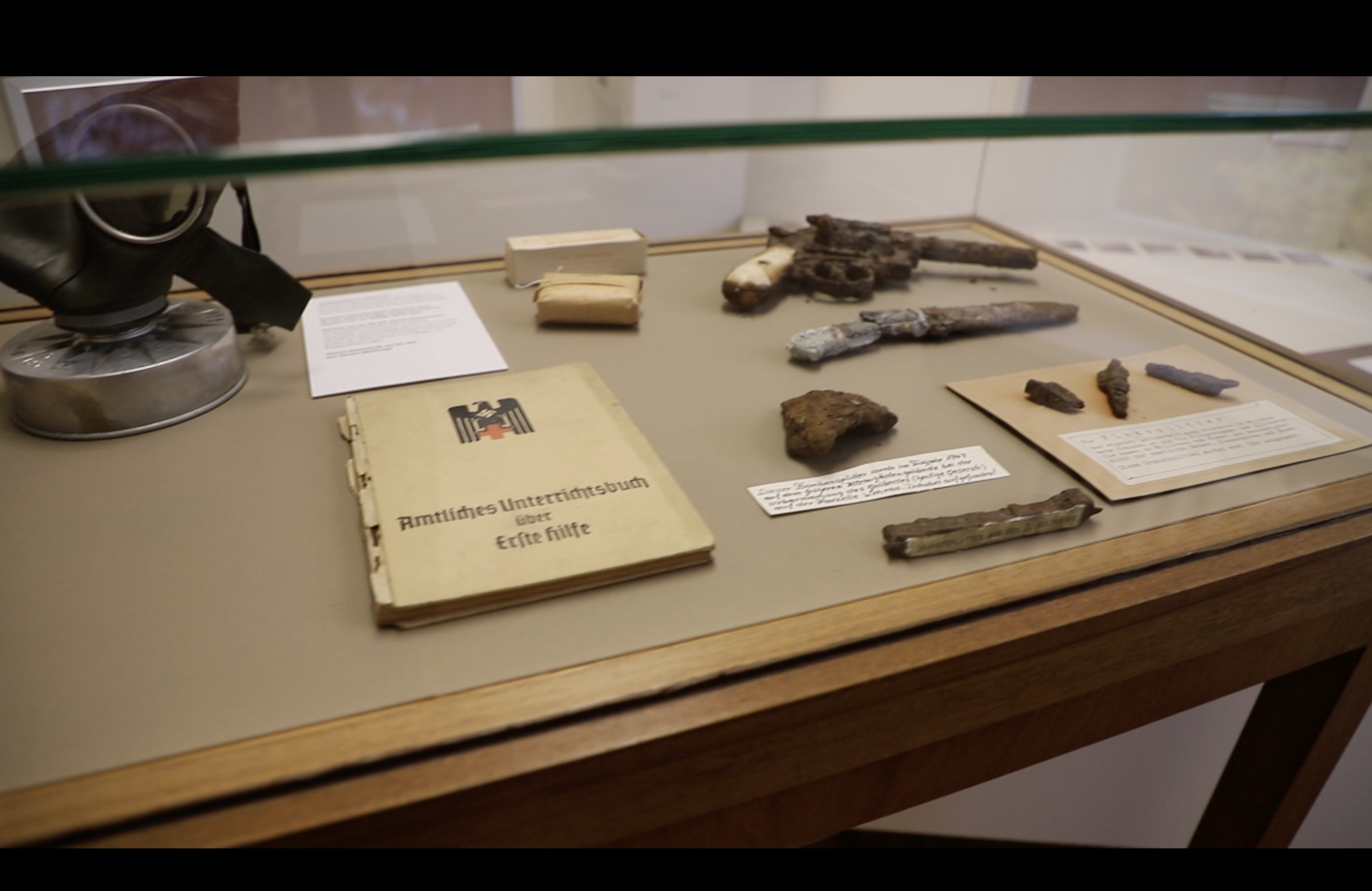
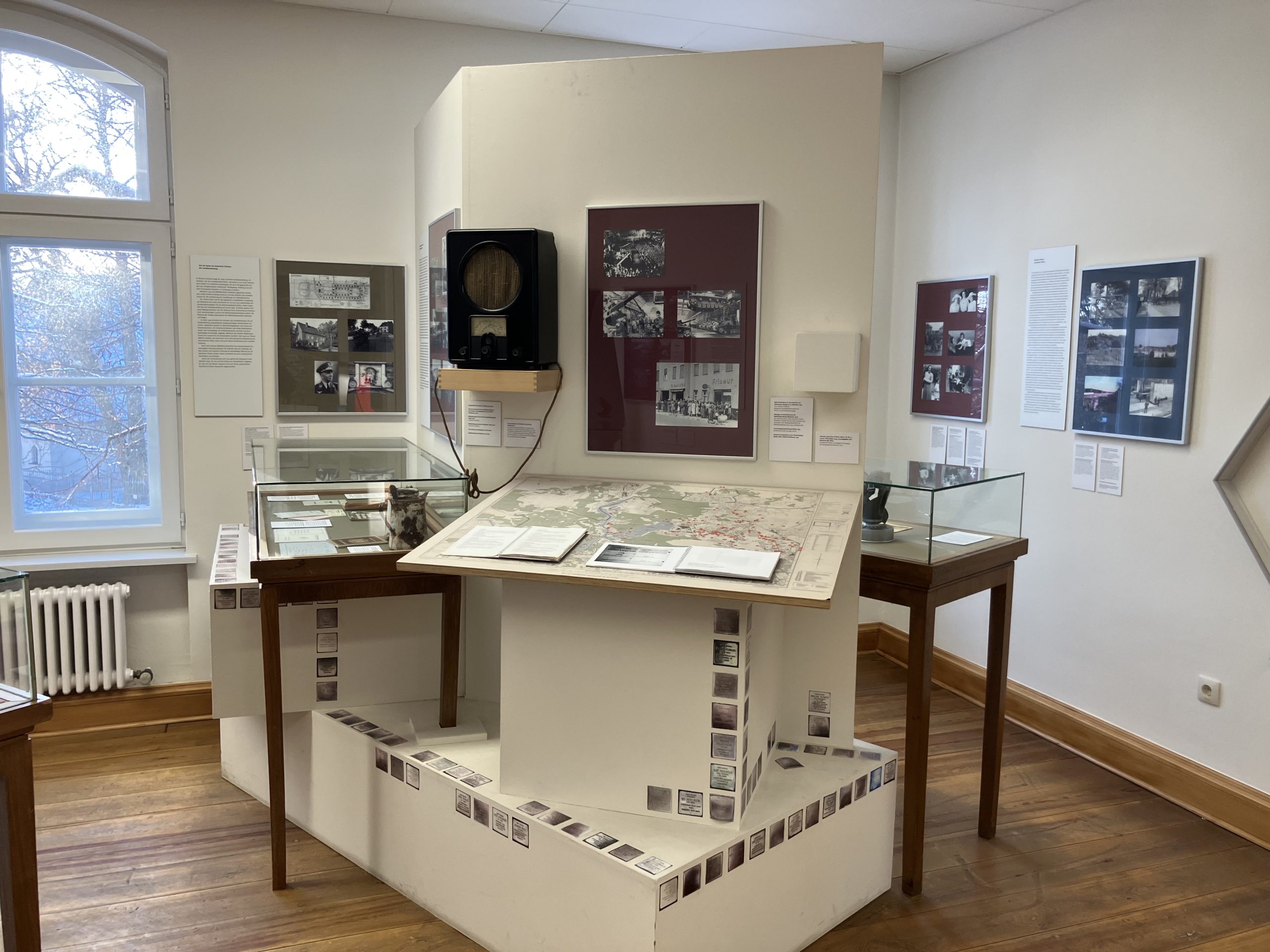
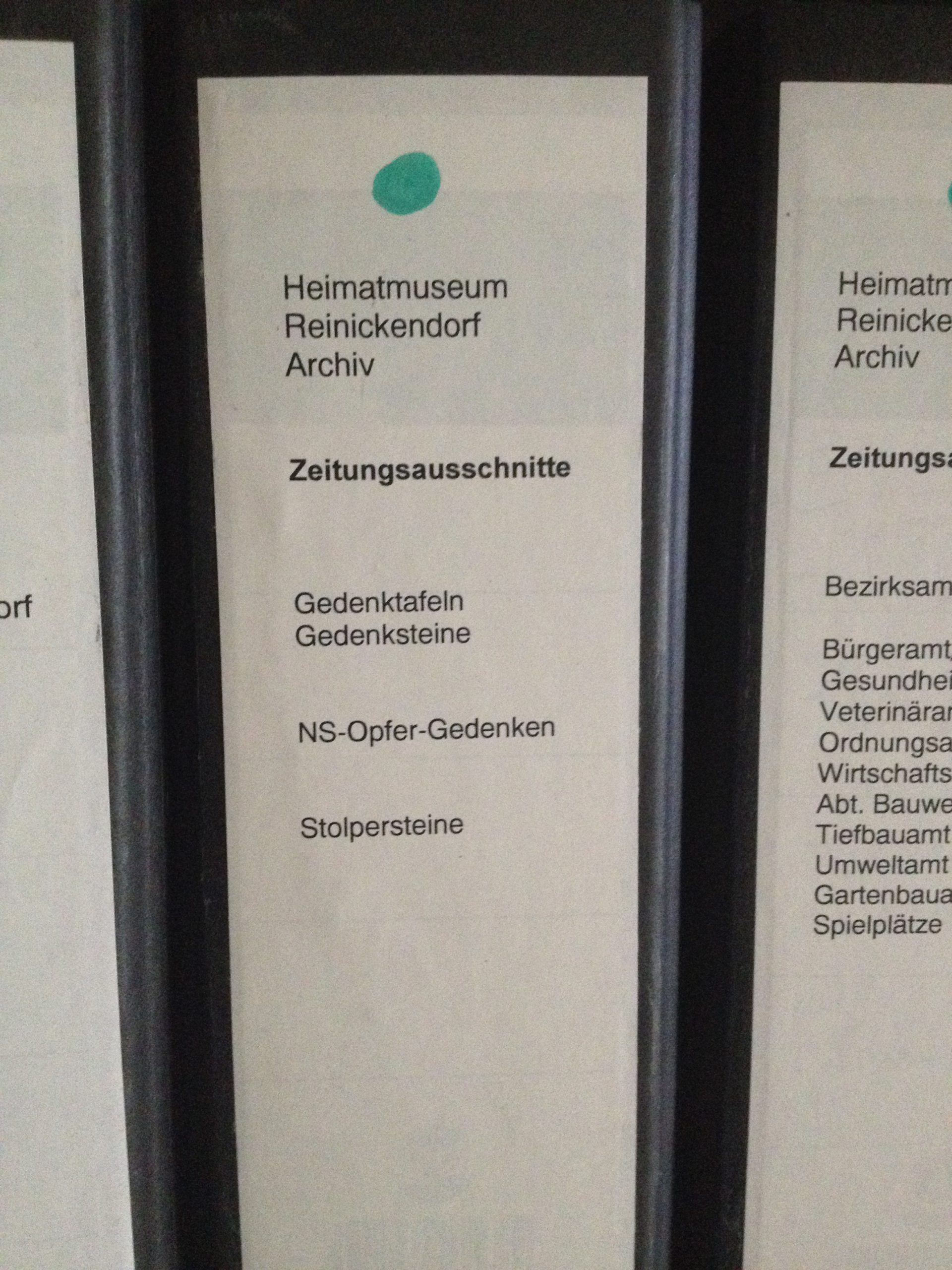
The discussion revisits an artistic intervention by Joshua Schwebel, commissioned in 2018 for Museum Reinickendorf but never realized. Schwebel’s proposal questioned the institutional approach to preserving artifacts from the Nazi era, raising fundamental questions about the role and responsibility of museums within German memory culture.
During discussions surrounding the proposed work, differing perspectives emerged, eventually leading to a breakdown in communication between the artist and the museum. Following a lengthy process of renewed dialogue, both parties are now coming together to revisit the circumstances of this conflict and reconsider the questions it raised.
The discussion extends beyond the history of an unrealized artistic project to examine the power dynamics between artistic practice and institutional responsibility, questions of interpretive authority, and how museums can engage with critical artistic interventions.
Together with art historian Ulrike Jordan, theorist Sebastián Eduardo Dávila, and provenance researcher Albrecht Wiesener, Joshua Schwebel will explore these questions in light of ongoing debates surrounding memory culture, the institutional representation of the Holocaust, and approaches to confronting antisemitism. The event also offers an opportunity to reopen a dialogue that was interrupted and to bring different perspectives on the original conflict into a shared public conversation.
Biographies of the Participants
Sebastián Eduardo Dávila
Sebastián Eduardo Dávila’s doctoral research explores questions of materiality in artistic practices in postwar Guatemala. He is a member of the DFG Research Training Group Cultures of Critique at Leuphana University Lüneburg. His articles and reviews have appeared in journals such as Miradas, Re, and Revista Poiésis, as well as on insurgencias.net, in the anthology Museums, Transculturality and the Nation State (edited by Susanne Leeb and Nina Samuel, 2022), and in the context of various art exhibitions. He has presented at conferences including Worldviews: Latin American Art and the Decolonial Turn (London/online, 2021) and Seeing more Queerly in the 21st Century (Miami, 2020). He is also a member of the collective VOCES de Guatemala en Berlín.
Ulrike Jordan
Ulrike Jordan is an art historian and cultural producer. Before joining the DFG Research Training Group Cultures of Critique at Leuphana University Lüneburg in 2019, she worked for various cultural institutions in Berlin, including Haus der Kulturen der Welt, Kunstraum Kreuzberg/Bethanien, and Maxim Gorki Theater. She is an active member of neue Gesellschaft für bildende Kunst (nGbK), where she collaboratively developed the projects Im Dissens (2019) and 50 Jahre neue Gesellschaft (2019). Together with Naomi Hennig, she curated the exhibition Context is Half the Work. A Partial History of the Artist Placement Group (Kunstraum Kreuzberg/Bethanien, 2015 / Summerhall Edinburgh, 2016).
Joshua Schwebel
Joshua Schwebel is a Canadian conceptual artist based in Berlin. His artistic practice operates at the intersection of intervention, institutional critique, and playful approaches. His work explores the symbolic and political contradictions of the contemporary art world, questioning the institutional structures within which art is produced and presented. He frequently intervenes directly in administrative and organizational processes, blurring the boundaries between artistic and institutional practice. Through deliberate acts of refusal, absence, and the incorporation of institutional decision-making processes, he reveals structural power relations and the discrepancies between how art institutions present themselves and how they actually operate.
Albrecht Wiesener
Albrecht Wiesener holds a PhD in History, specialising in contemporary German history and European urban history. He studied History and Philosophy at the Free University of Berlin and the University of North London. From 2001 to 2024, he worked as a research assistant and research manager at various research institutions (ZZF Potsdam, Freiburg Institute for Advanced Studies, BTU Cottbus-Senftenberg and Bauhaus University Weimar). Since 2024, he has been teaching regularly as an adjunct instructor at the Council for International Educational Exchange in Berlin (CIEE), covering architectural history and contemporary German history with a focus on Berlin. Since June 2026, he has been conducting an initial assessment to investigate the provenance of the collections and individual objects at the Museum Reinickendorf.